Air filters · Type 03 of 08
HEPA filters
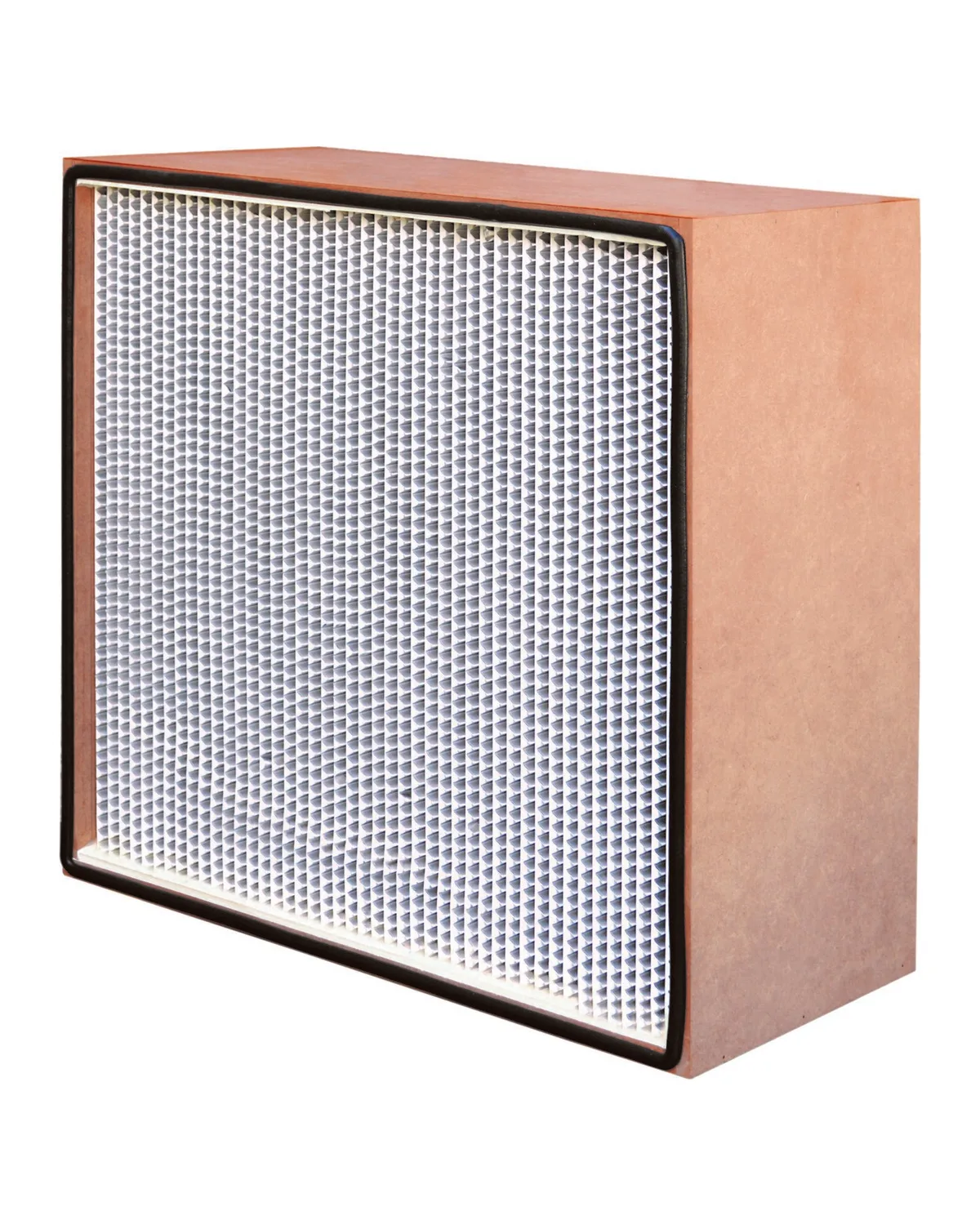
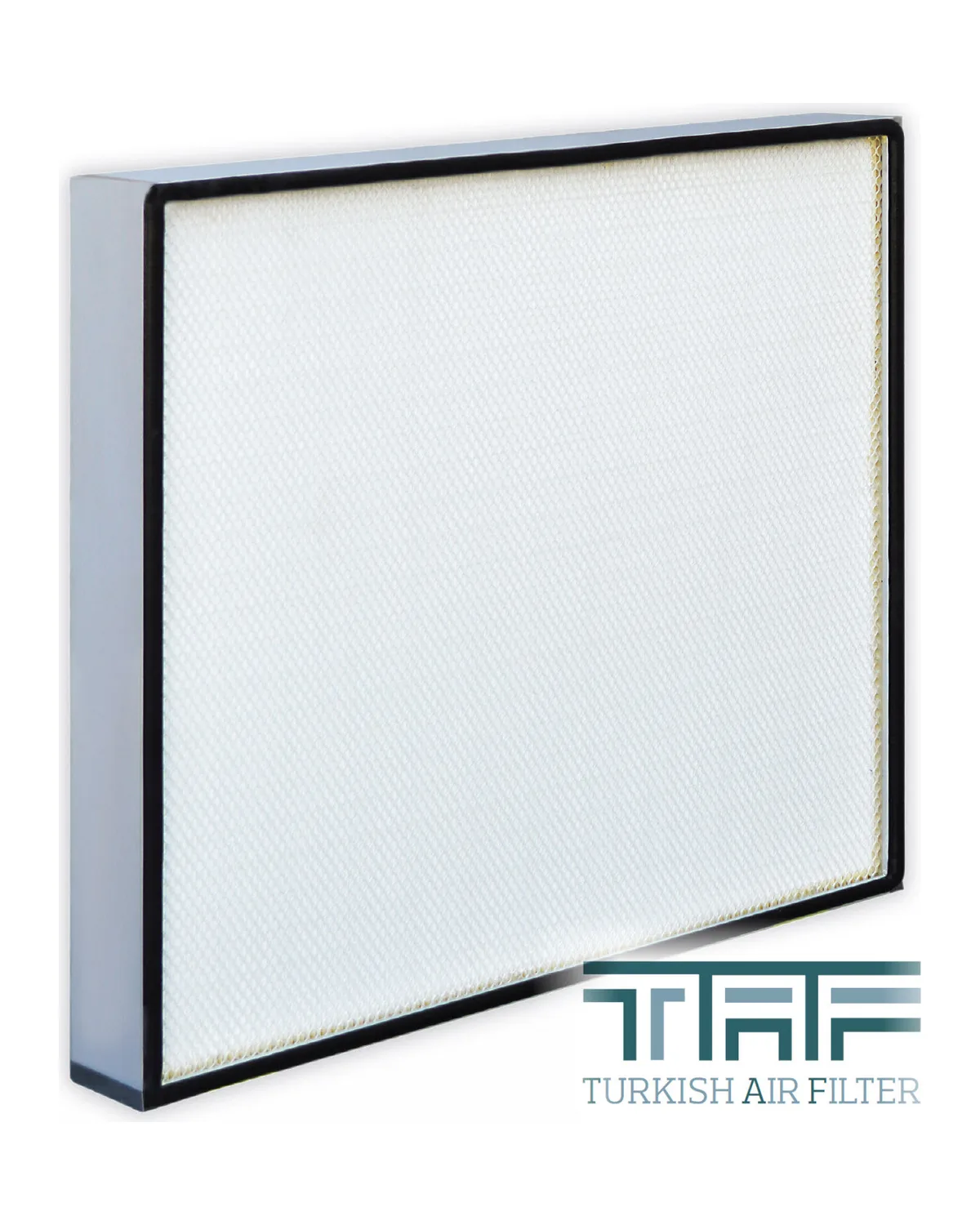
A HEPA filter is a high-efficiency particulate air filter. The media is a very fine glass fibre paper folded into closely spaced mini-pleats, held apart by separators or by a thread or bead pattern, and sealed into a rigid frame. The result is a filter that captures particles down to the most penetrating particle size at a very high efficiency.
- Drawing
- AKS-AF-HEPA
- Sheet
- 09 / 17
- Rev
- 2026-11-16
Construction
How a HEPA filter is built.
HEPA filters are classed under EN 1822, which is aligned with ISO 29463. H13 and H14 are the HEPA classes buyers ask for most. Below them are the E10 to E12 classes, and above them the ULPA classes U15 to U17. The class is a tested result, and a filter is normally supplied with its own test information, so ask for it with your order. We confirm the exact rating for your order.
| Construction | Mini-pleat glass fibre pack with separators, sealed in a rigid frame |
|---|---|
| Classes | EN 1822 / ISO 29463: H13 and H14 (E10 to E12 below, U15 to U17 above) |
| Frame | Wood, MDF or aluminium, with a gasket where the housing needs one |
| Upstream need | A pre-filter and often a fine second stage |
| What we need from you | Width × height × depth in mm, class, frame, gasket, quantity |
Performance and care
What to expect, and how to look after it.
Performance and limits
Frame and gasket matter as much as the media. The frames shown on this page are wood, MDF and aluminium, and a filter can also have a gasket on one face. The frame has to match the housing, and the seal has to be tight, because air that bypasses the media defeats the efficiency of the filter. Housings are often tested in place by scan or by a leak test after the filters are fitted.
Fitting and replacement
A HEPA filter is not a first-line filter. It needs a pre-filter, and often a second fine filter, upstream so the pack is not loaded with coarse dust. Handle it by the frame, never by the media, and keep it dry. A filter that has been dropped or whose media has been touched should not go into service.
Where it is used
Where HEPA filters are used.
Cleanrooms and pharmaceutical production
Terminal HEPA filters in the ceiling supply the clean air that the room classification depends on.
Hospitals and operating theatres
Supply air for theatres, isolation rooms and sterile processing, where airborne particles are a clinical risk.
Electronics, semiconductor and optics assembly
Tiny particles cause defects, so the air entering the work area is filtered to a high EN 1822 class.
Laboratories and containment
Safety cabinets and extract systems use HEPA filtration to hold particles back from the room or the outside air.
Food and drink, and sensitive packaging
Filling lines and clean packing areas, where particles and spores carry a quality risk.
Choosing
This type, or a different one.
Choose it when
Choose HEPA when the room or the process has a particle target set by a standard, a cleanroom class, a clinical risk or a quality system. The class you ask for is normally set by that target.
Choose another type when
Choose bag or compact filters when the aim is good general air quality rather than a controlled class, and add a carbon filter when the contaminant is a gas or an odour. HEPA does not remove gases.
How to specify
Four details are enough to price a filter.
Send these four and a person can check the request. If one is missing, send what you have: a photo of the old filter and its label often fills the gaps.
- 01
Size
Width × height × depth in millimetres, for example 592 × 592 × 292. Measure the frame of the old filter or the opening it sits in. If the old filter has been squeezed into its slot, measure the slot. Standard and custom sizes are both possible, so send exact figures.
- 02
Class
Tell us the class you need (ISO 16890 or EN 1822). If your paperwork uses the older EN 779 names, such as G4 or F7, send those and we will match them. If you do not know the class, send the label of the filter you use now.
- 03
Quantity
How many of each size, and whether this is a one-off order or a regular one. A mixed list is fine, with one line per size.
- 04
Application and airflow
What the filter sits in, such as an air handling unit, a fan-coil unit, an oven or a cleanroom ceiling, and the airflow in cubic metres per hour if you have it. Add the temperature, the humidity and anything unusual in the air, such as grease, oil or chemicals.
A person checks every request. We tell you what matches, what differs and what we could not confirm, and we confirm the exact rating for your order.
Filter desk
Ask about HEPA filters. A person replies.
The request form below is set to air filters and to this type. Give the size, the class and the quantity, add a photo of the old filter if you have one, and send it. A person reads every request, checks the details against the TAF range and replies by phone, WhatsApp or email.
Not sure this is the right type? Leave it as it is and say what the filter is for. We will tell you if another type fits better.
Questions
HEPA filters: common questions.
What is the difference between H13 and H14?
They are two classes in EN 1822. H14 is the higher of the two, and it allows fewer particles through at the most penetrating particle size. The right class is set by the application: the room classification, the standard you work to, or your quality system. We confirm the exact rating for your order.
Do HEPA filters come with test information?
HEPA and ULPA filters are tested and classed under EN 1822. Ask for the test information when you order, and tell us if your quality system needs it with the delivery. We will confirm what comes with the filters you want before you commit.
Which frame should I choose?
Match the frame to the housing and the environment. Wood and MDF frames are common and economical for dry conditions. Aluminium suits damp or cleaned areas and gives a precise, rigid seat. If the air is wet, hot or corrosive, say so with your enquiry.
Can a HEPA filter be cleaned and reused?
No. Cleaning breaks the media and the pleat structure, and a damaged filter can pass particles without any sign. Replace the filter when its pressure drop reaches the limit, or when it fails a test. Keep a pre-filter upstream to stretch the life of the HEPA stage.