Air filters · Type 02 of 08
Bag filters
A bag filter, also called a pocket filter, is made of several long pockets of filter media sewn or welded together and fixed to a header frame. The pockets hang downstream of the frame, so a single filter has a media area many times larger than its face. That is the reason a bag filter carries a high airflow at a modest resistance.
- Drawing
- AKS-AF-BAG
- Sheet
- 08 / 17
- Rev
- 2026-11-16
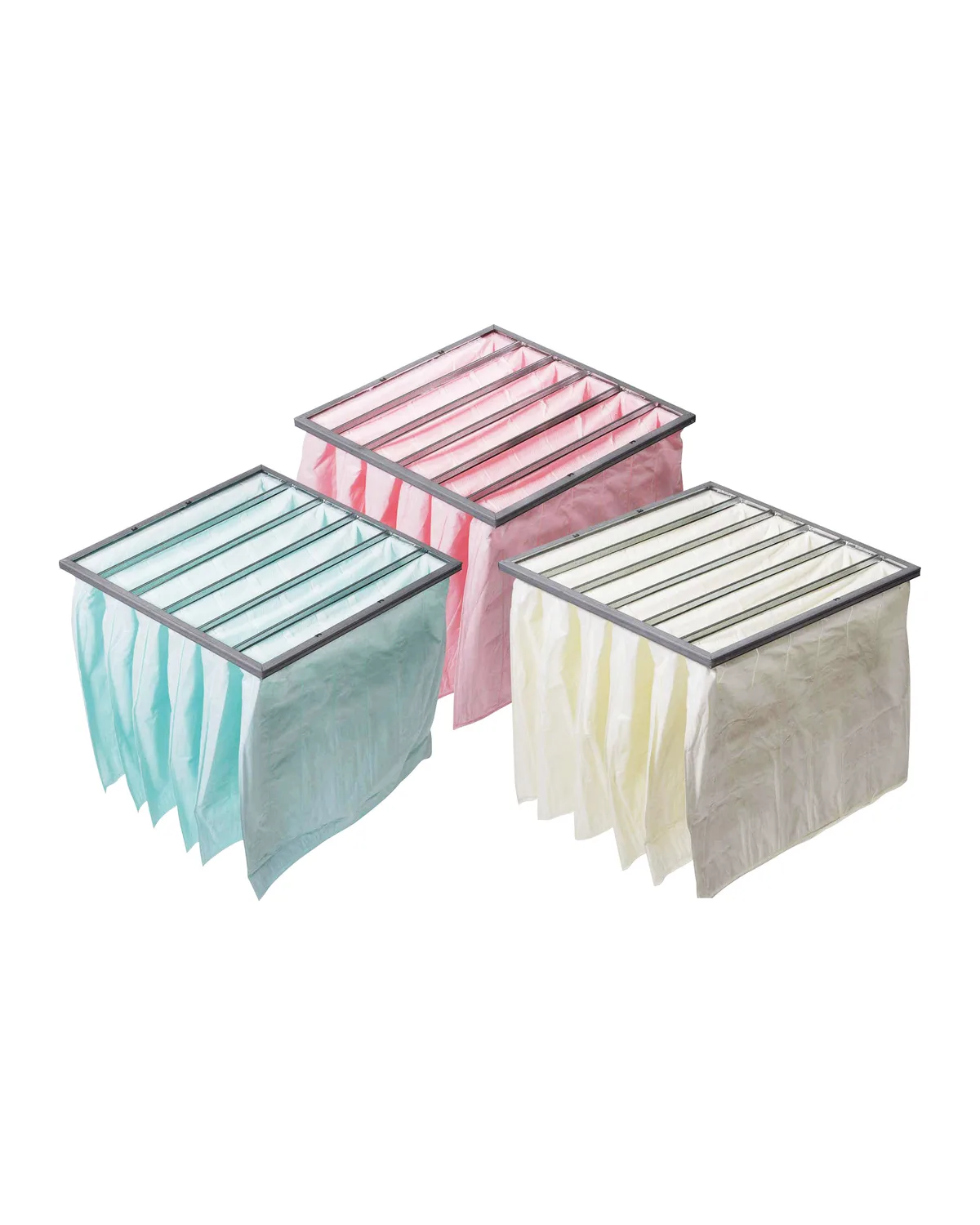
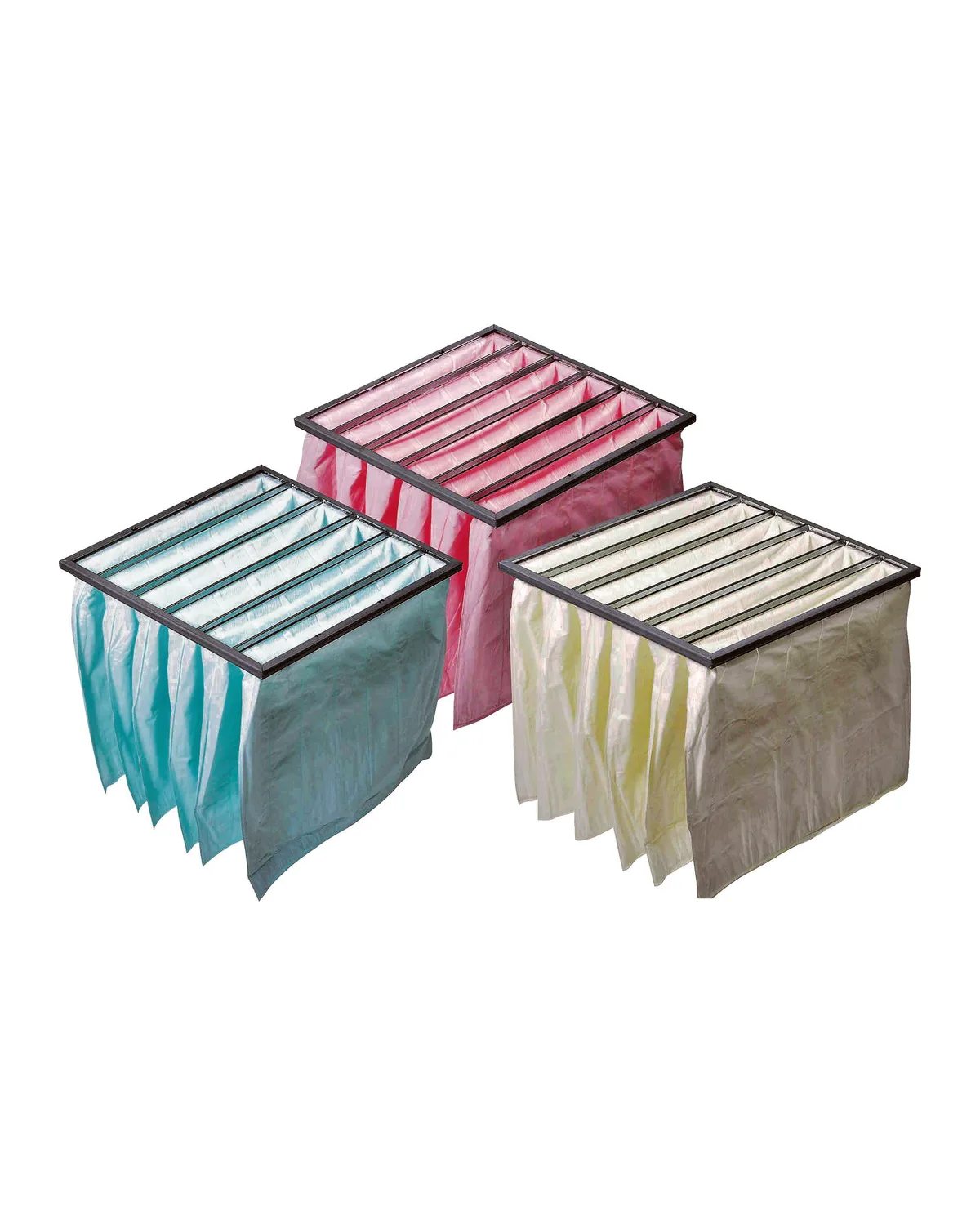
Construction
How a bag filter is built.
The media is usually synthetic or glass fibre. Pocket count and pocket length set the media area, and the right choice depends on the airflow and the housing. The depth of the filter is the pocket length, so a bag filter needs a housing with room behind the frame. If you do not have that room, a compact filter is the usual answer.
| Construction | Several pockets of media on a header frame; depth is the pocket length |
|---|---|
| Media | Synthetic or glass fibre, set by the class |
| Classes to ask about | ePM10, ePM2.5 and ePM1 (old F5 to F9) |
| Housing need | Room behind the frame for the pockets to hang |
| What we need from you | Face size, pocket length available, class, airflow, quantity |
Performance and care
What to expect, and how to look after it.
Performance and limits
In ISO 16890 terms, bag filters cover the fine-dust groups from ePM10 up to ePM1. The old EN 779 names, such as F5 to F9, still turn up in enquiries, and we map them to the current groups.
Fitting and replacement
Install bag filters the way the maker intends, normally with the pockets hanging straight down and the airflow kept within the range for that filter. At very low airflow pockets can sag, and at high airflow they can flap and wear. We confirm the exact rating for your order.
Where it is used
Where bag filters are used.
Second stage in air handling units
A bag filter behind a panel pre-filter does the main fine-dust work in offices, hospitals and public buildings.
Large commercial ventilation
Shopping centres, airports and hotels, where airflows are high and a low pressure drop keeps fan energy down.
Process air in light industry
Food and packaging halls, electronics assembly and print rooms that need cleaner supply air than a panel gives.
Final filter ahead of a HEPA stage
Bags remove most of the load so the HEPA filter behind them is not clogged early.
Paint and finishing shops
The supply air to a booth or a prep area, where fine dust shows up in the finish.
Choosing
This type, or a different one.
Choose it when
Choose a bag filter when the air handling unit has depth behind the filter frame, when the airflow is high, and when you want a long life and a low resistance from a fine-dust filter at a reasonable price.
Choose another type when
Choose a compact filter when the housing is too short for pockets or the pressure swings, and a panel filter when the stage is only a coarse pre-filter. Choose HEPA when a controlled room class is the target.
How to specify
Four details are enough to price a filter.
Send these four and a person can check the request. If one is missing, send what you have: a photo of the old filter and its label often fills the gaps.
- 01
Size
Width × height × depth in millimetres, for example 592 × 592 × 292. Measure the frame of the old filter or the opening it sits in. If the old filter has been squeezed into its slot, measure the slot. Standard and custom sizes are both possible, so send exact figures.
- 02
Class
Tell us the class you need (ISO 16890 or EN 1822). If your paperwork uses the older EN 779 names, such as G4 or F7, send those and we will match them. If you do not know the class, send the label of the filter you use now.
- 03
Quantity
How many of each size, and whether this is a one-off order or a regular one. A mixed list is fine, with one line per size.
- 04
Application and airflow
What the filter sits in, such as an air handling unit, a fan-coil unit, an oven or a cleanroom ceiling, and the airflow in cubic metres per hour if you have it. Add the temperature, the humidity and anything unusual in the air, such as grease, oil or chemicals.
A person checks every request. We tell you what matches, what differs and what we could not confirm, and we confirm the exact rating for your order.
Filter desk
Ask about bag filters. A person replies.
The request form below is set to air filters and to this type. Give the size, the class and the quantity, add a photo of the old filter if you have one, and send it. A person reads every request, checks the details against the TAF range and replies by phone, WhatsApp or email.
Not sure this is the right type? Leave it as it is and say what the filter is for. We will tell you if another type fits better.
Questions
Bag filters: common questions.
How is a bag filter different from a compact filter?
Both are fine-dust filters with a large media area. A bag filter reaches that area with long flexible pockets and needs depth behind the frame. A compact filter packs rigid pleated V-banks into a short, rigid body. If the housing is deep, bag filters are the economical choice. If the housing is short, a compact filter fits.
How many pockets do I need?
The pocket count follows the face size, the airflow and the class. More pockets give more media and lower resistance at the same airflow. You do not have to choose it: give us the face size, the depth you have and the airflow if you know it, and we will say what is offered.
Can bag filters be mounted horizontally?
That depends on the construction. Pockets that hang in the airflow are designed to hang straight down, and in a horizontal installation they can sag and bunch up. Tell us how the filter sits in the housing and whether it is on a side-loading or front-loading frame, and we will check.
When should I change a bag filter?
Change it when the pressure drop reaches the final value set for the system, or when the pockets are visibly torn or collapsed. If there is no pressure gauge, a regular visual check and a fixed change interval based on the site are the fallback. The interval varies a lot with the dust in the air.